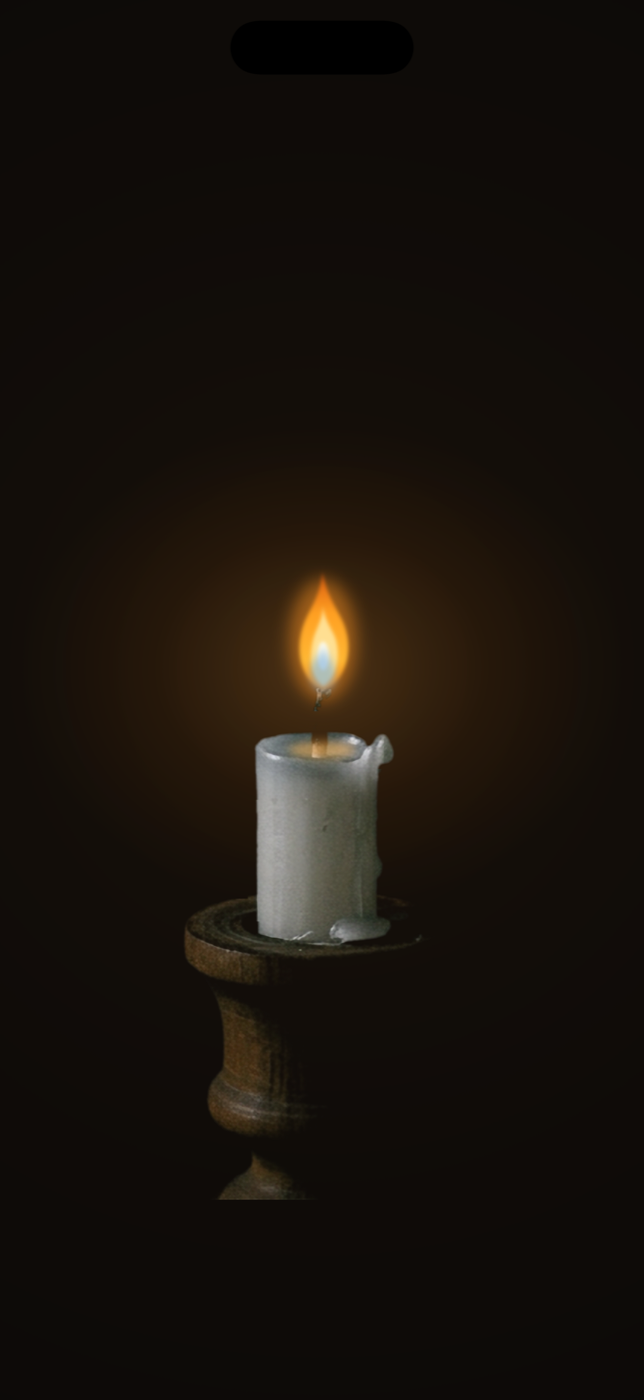
BREATHING is an app for settling your breath while watching a candle on the screen. The flame moves at the rhythm you set: it shrinks for the seconds of the exhale, waits at that height for the hold, and rises back over the seconds of the inhale. You breathe out, hold and breathe in along with it. There are no numbers and no arrows, and no microphone or sensors — the flame leads, you follow. Keep your eyes on it and your breath falls into the rhythm on its own.
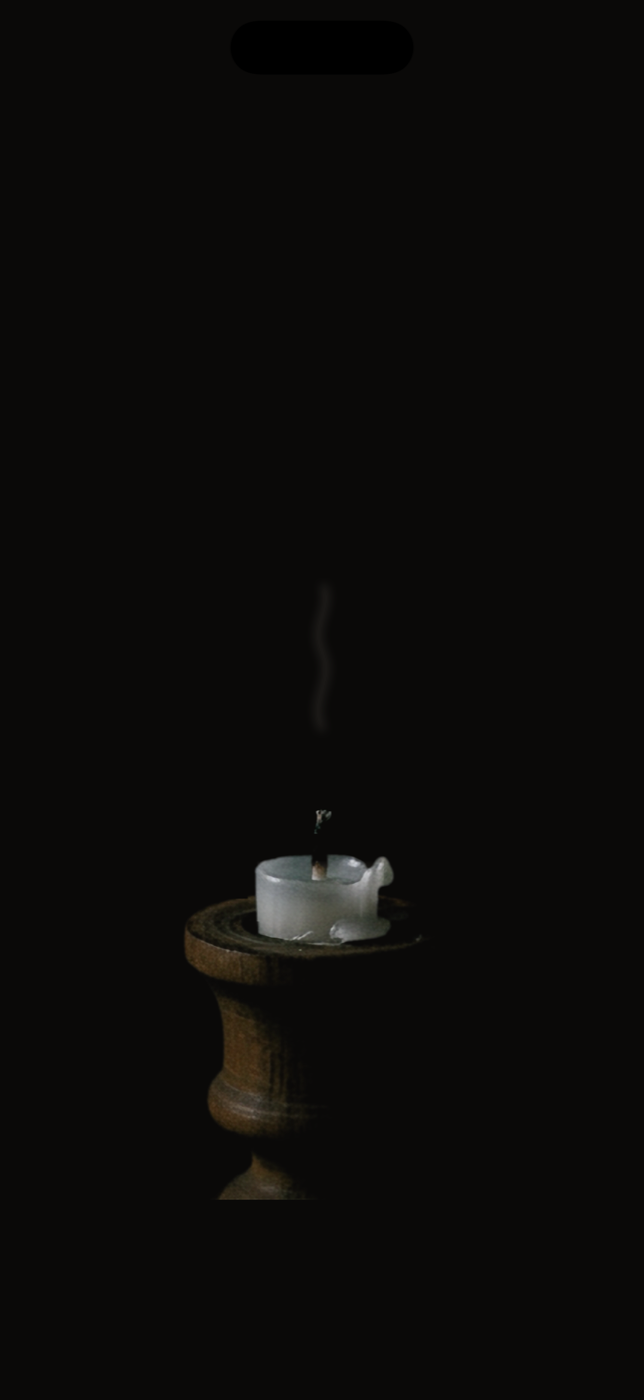
When the chosen time is up, the candle goes out quietly at the end of an exhale. No bell rings and nothing is awarded. Smoke rises, the afterglow slowly fades, and that is the end. Everything stays on your device. No network, no ads, no account.

All you do is watch the flame
The flame sets the rhythm
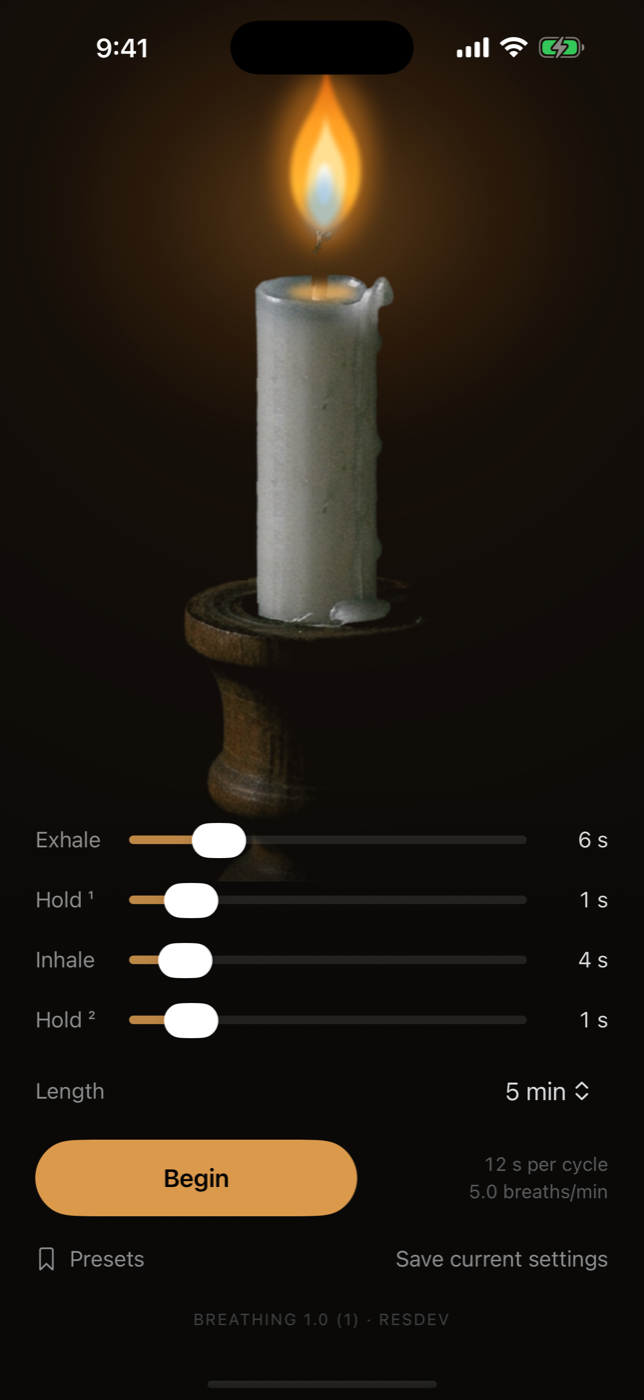
It shrinks, waits and returns exactly on the seconds you set. You simply breathe along with it. It does not sense your breathing — the flame leads.
Four sliders for the rhythm
Exhale, hold, inhale, hold — in one-second steps. Seconds per cycle and breaths per minute update as you move them.
No settings that are too fast
Exhale is at least 4 seconds and inhale at least 3. The app keeps these floors so a rhythm cannot be set that would lead to over-breathing.
From 1 to 30 minutes
The session ends at the end of the first exhale after the time is up, so it never feels cut off.
It ends by going out
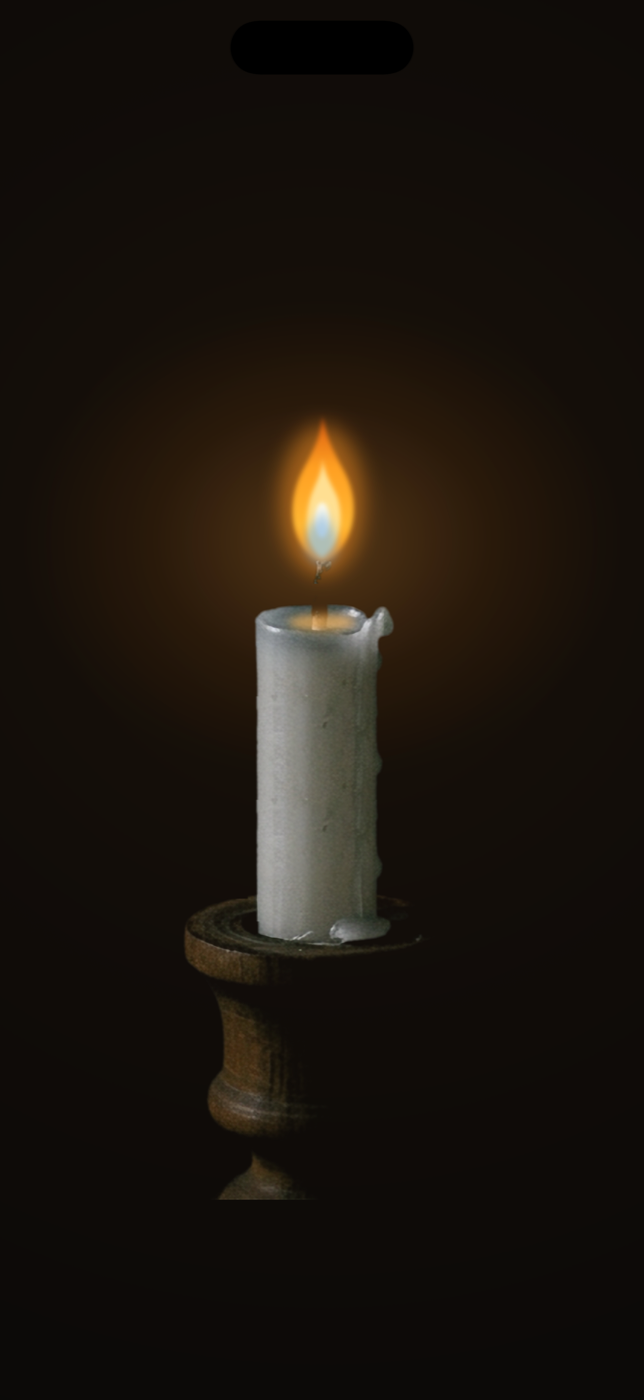
No bell, no achievement screen. The flame goes out, smoke rises, the afterglow fades. That is the signal.
Breath scan (1.1)
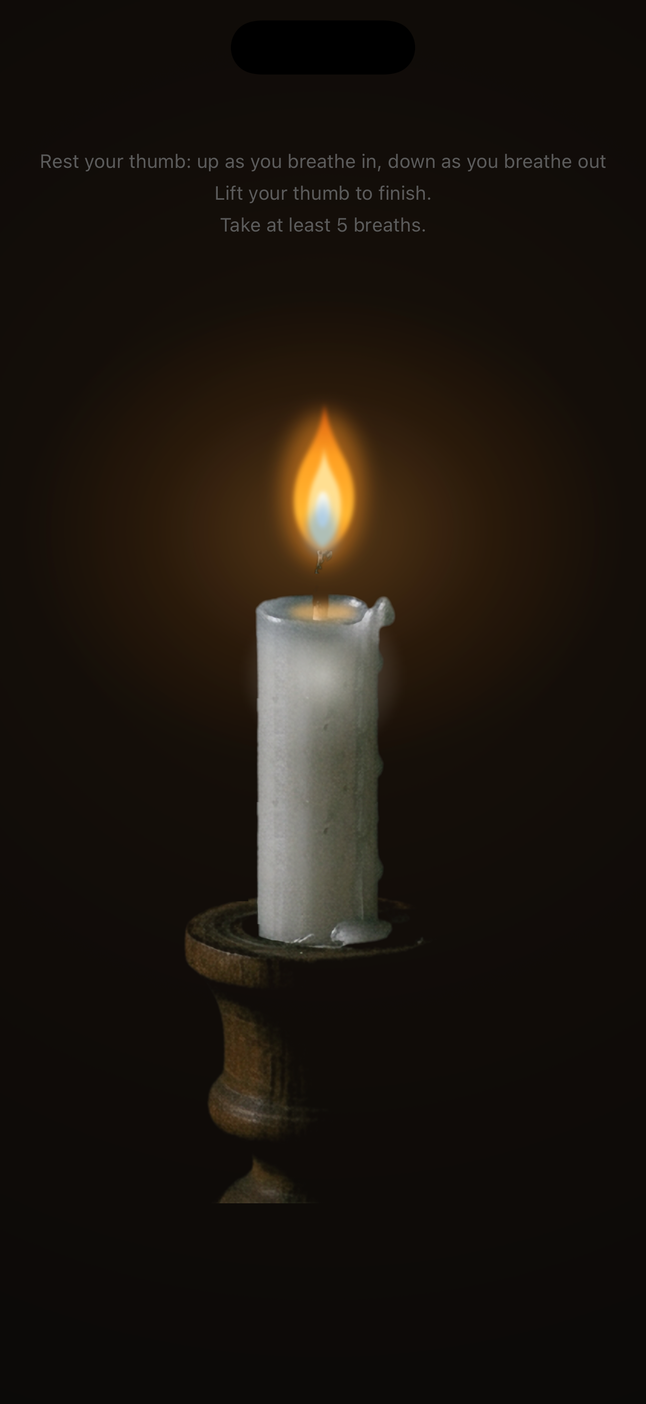
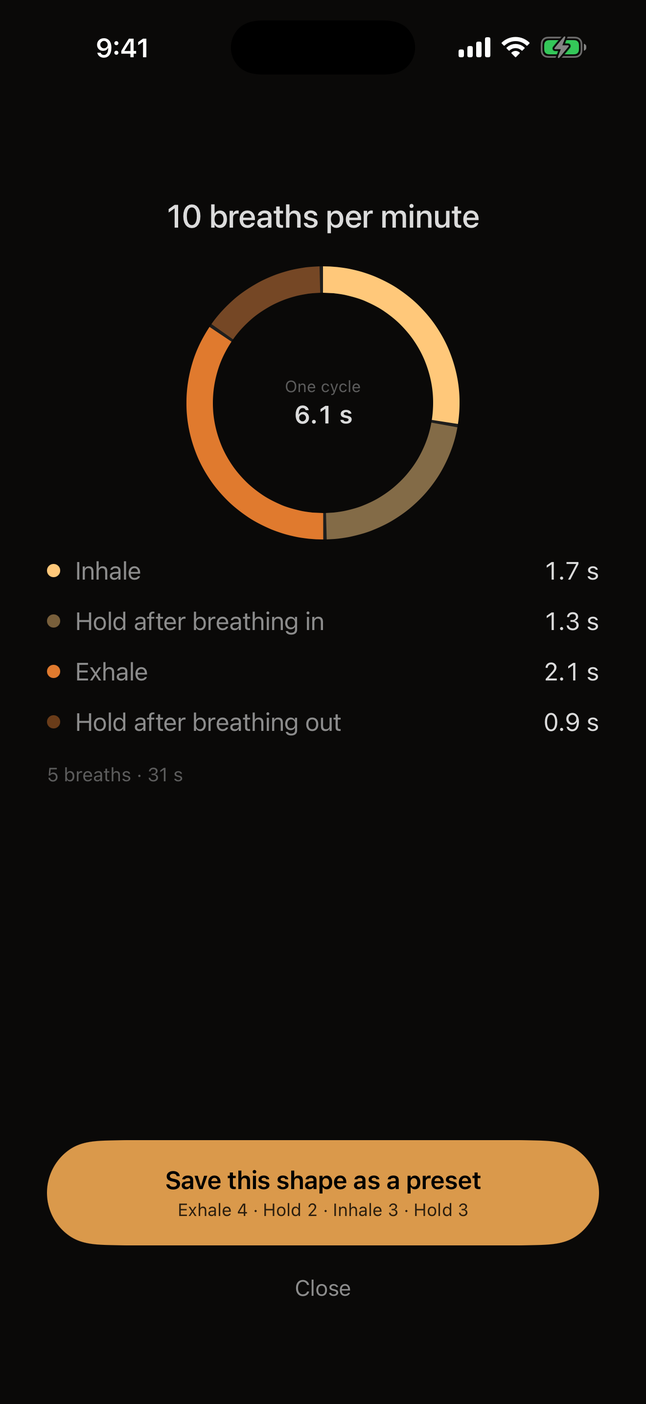
Rest your thumb on the screen, move it up as you breathe in and down as you breathe out. The flame grows and shrinks with it. When enough breaths have been taken, the candle goes out and the scan ends. The app describes breaths per minute and the seconds of in, hold, out and hold — nothing more. No good or bad, no targets.
Presets
Name and save a rhythm and length you like — "before bed", "between meetings". A shape from a breath scan can be sent straight to a preset.
Only the flame on screen
No text or buttons during a session. To stop early, just tap the screen.
Zero network
The app contains no code that connects to the internet. It works exactly the same in airplane mode.
What we decided when building it
No end bell
A sound at the end of a quiet stretch undoes it with a jolt. The few seconds of the flame going out and 45 seconds of afterglow give the body time to come back on its own.
No counting
Show numbers or arrows and people watch the numbers instead of the flame. Every piece of breathing information is expressed in the shape of the flame.
No records
No streaks, no session counts. A few quiet minutes now matter more than keeping it up.
Measured, not scored
Breath scan turns the movement of your thumb into numbers and stops there. No ideal values, no comparison with yesterday. You decide what it means; the app describes and keeps quiet. When a shape is sent to the candle, the ratio stays yours — only the pace is stretched to the safe minimum.
Stack
- App
- SwiftUI (iOS 17+), no external dependencies
- Candle
- A photo of an unlit candle cut into three parts; flame, glow and smoke are drawn on a Canvas (hybrid)
- Breathing core
- A standalone Swift package (safety floors, cycle, end time, easing, breath-scan analysis — fixed by 42 tests)
- Storage
- UserDefaults only (settings, presets and the last 30 breath scans)
- Platform
- iPhone (iOS 17+)
The candle body is a photograph; the light is generated. Because the screen actually emits light, the flame reads as light rather than as a picture of one. The flicker is driven by deterministic noise, so it looks the same regardless of device performance.
Platform
iPhone (iOS 17+)
Price
Free
Languages
English / Japanese
Release

Latest
1.2 (September 22, 2026) — the flame shrinks to a point; Breath scan ends when the candle goes out; start with an exhale or an inhale
Developed by RESDEV, the development division of RESONANCE, K.K. Read: Why I took the alarm out of a breathing app. See also the privacy policy. This app is not a medical device and is not intended to diagnose, treat or prevent any condition. If you feel unwell, stop and consult a doctor.
Talk to us about an app
Come to us at the "we want something like this" stage. What we try in our own apps goes straight into client work.
Contact us